
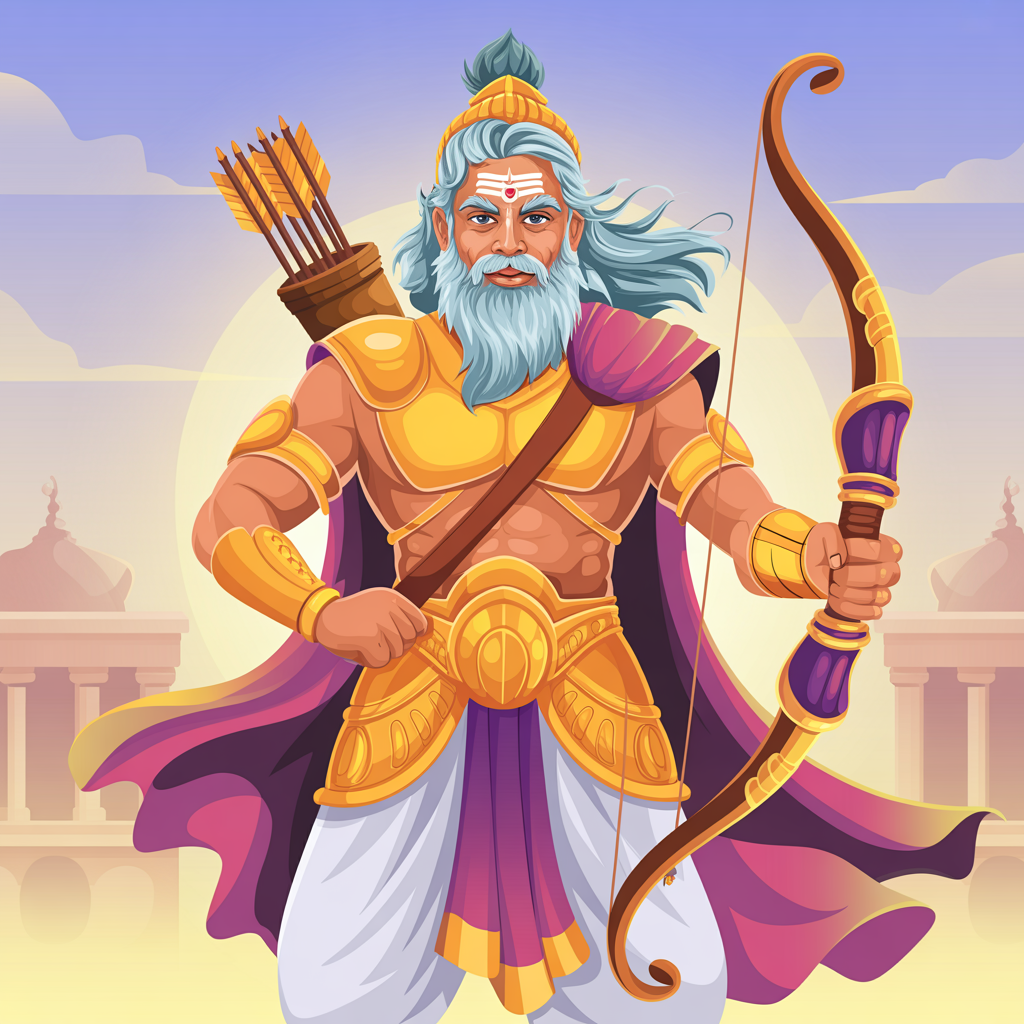
Who was Pitamah Bhishma in his previous life, one of the most venerated figures in the Mahabharata?
Pitamaha Bhishma stands as one of the most iconic and revered figures in the Mahabharata, distinguished by his solemn vow of lifelong celibacy, his extraordinary moral fortitude, and his steadfast dedication to the welfare of the Kuru dynasty. His life and actions, shaped by an unparalleled commitment to duty and principle, cast him as a central and enduring force within the epic’s dramatic tapestry.

But… Do you know the reason behind Bhishma Pitamah’s Sorrowful longer life on earth?
The august saga of Bhishma Pitamah, the most revered patriarch of the Kuru lineage, originates not upon mortal soil but within the luminous realms of the heavens. In his primordial existence, Bhishma was Dyu (Prabhasa), one of the illustrious Eight Vasus—celestial beings entrusted with divine duties in the cosmic order.

The Previous Birth (The Curse):
Prabhasa Bound by affection and fate was led astray when he along with his brothers, stole the divine cow Nandini (the sacred wish-fulfilling cow who was the daughter of Kamadhenu and was the cherished possession of Rishi Vashishta) from Sage Vashistha‘s ashram at his wife’s request.
The omniscient Sage Vashishtha, discerning the violation of dharma, pronounced a solemn curse upon the Vasus, condemning them to take birth upon Earth and endure the anguish of mortal existence.
Rishi Vashistha’s Mercy:
Yet, tempered by mercy, he softened the decree for seven, allowing them release soon after birth. Prabhasa alone was destined to endure a long earthly life—laden with sacrifice, sorrow, and supreme responsibility—so that the fruits of his actions might be fully realized.

Devavrata’s Birth:
In due course, Prabhasa descended into the mortal realm as Devavrata, born to King Shantanu of Hastinapur and the celestial river-goddess Ganga.
Goddess Ganga’s condition to Raja Shantanu:
Goddess Ganga before marrying Shantanu has kept a condition before him that after their marriage, whatever she does either good or bad he will never stop her nor question her and if ever for any reason Shantanu breaks this promise, then she will leave him forever to which Maharaj Shantanu accepted.
In fulfilment of the curse, Ganga consigned their first seven sons to the sacred waters immediately upon birth, releasing them from earthly bondage.


Shantanu’s Intervention:
But When Ganga tried to drown Devavrata, Shantanu broke his vow (never to question her actions) and stopped her.
Revelation & Boon:
Ganga then revealed Devavrata’s divine origin and the curse, promising to return him after he received divine knowledge and skills, and granting him the boon of Ichchha Mrityu (choosing his time of death).
Leave a Reply